
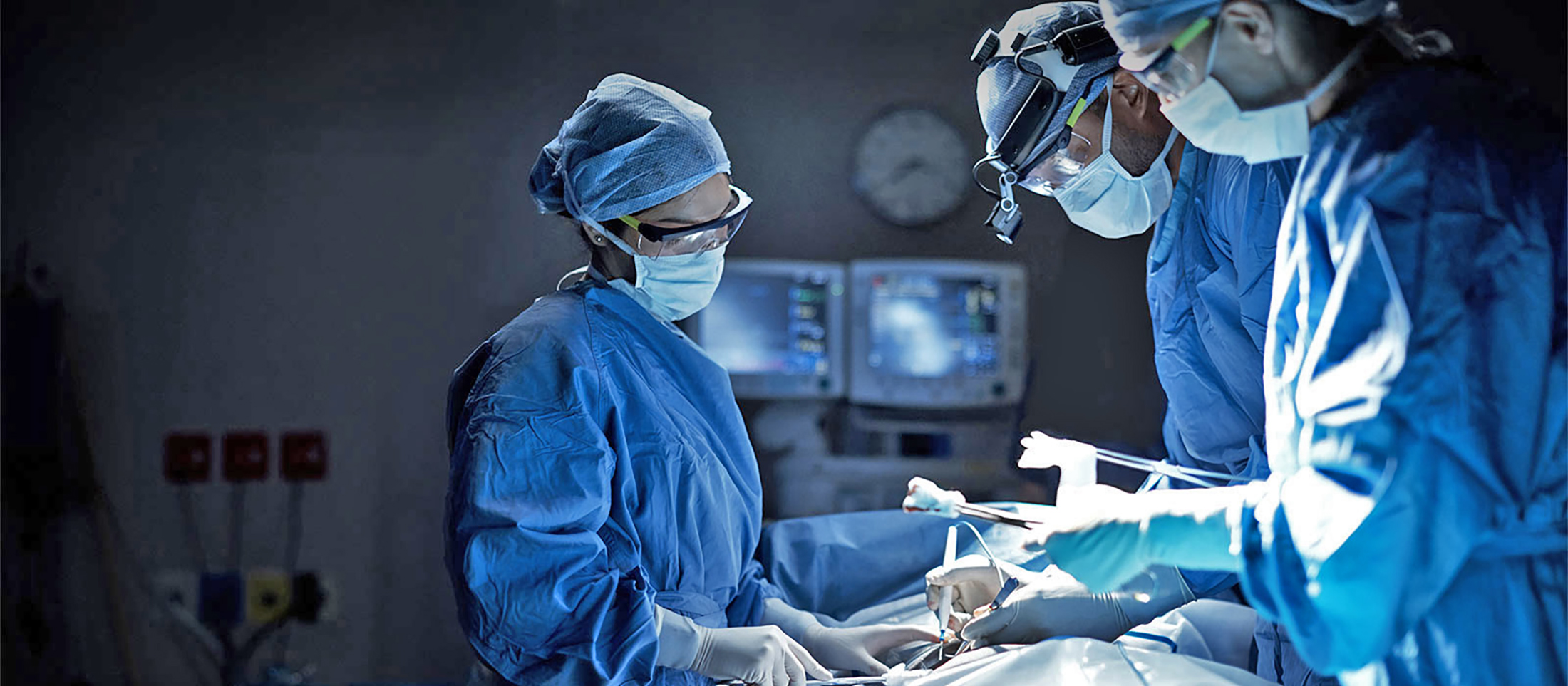
With the introduction of tracheal intubation and positive pressure ventilation of the lungs, true advances in the field of thoracic and cardiac surgery occurred after World War I. This permitted the safe exploration of the contents of the chest for repair and treatment. For the first time the lungs, esophagus, diaphragm, certain mediastinal structures, and the chest wall could be safely treated surgically for congenital abnormalities, traumatic injuries, malignancies, and degenerative problems. By World War II, the specialty of thoracic surgery was firmly established, and only work on the heart awaited the arrival of a device which could take over its function to allow corrections on it.
The heart-lung or cardiopulmonary bypass machine was first used successfully on May 6, 1953 by Dr. John Gibbon at Jefferson Medical College Hospital in Philadelphia, and with that event, cardiac surgery was on the way to become a true reality. The heart could be stopped and repairs upon it performed. In other words, the heart-lung machine did for cardiac surgery what positive pressure ventilation did for the open chest. There were several medical centers noted for their contributions to the field of cardiac surgery, but many regard the University of Minnesota in Minneapolis as the epicenter of the birth of open heart surgery. Five surgeons from the University of Minnesota of that era relocated to Wayne State University in Detroit in 1962 when cardiothoracic surgeon Dr. Alan Thal was appointed Penberthy Professor of Surgery and Chairman of the Department of Surgery at Wayne State University. I was the most junior of these “Minnesota five.”
From the state of Michigan have come many contributions to the field of thoracic and cardiac surgery. The University of Michigan created the first residency training program in thoracic surgery in the country in 1928. The American Board of Thoracic Surgery, originally named the Board of Thoracic Surgery, was founded in Detroit in 1948, and it remained based in Detroit until 1986. Less known in the history of cardiac surgery was the development and successful use of a cardiac bypass machine by Dewey Dodrill, MD in 1952, the year prior to Dr. Gibbon’s widely heralded procedure. Dodrill’s feat is regarded by many as truly the first operation done on the human heart assisted by a bypass machine. First used at Harper Hospital in Detroit, the device bypassed only the heart and not the lungs, however, and as a result it did not receive the acclamation which John Gibbon’s cardiopulmonary bypass machine received a year later. Dr. Dodrill’s amazing contribution to cardiac surgery has been well noted in a special publication from The American College of Cardiology fifteen years ago. Included in that publication are tributes to other Michigan cardiothoracic surgeons who made original contributions to our specialty. For additional reading, one may consult the masterful 1 two volume work of Larry W. Stephenson of Wayne State University entitled Detroit Surgeons-300 Years. Published in 2011, the book details interesting facts about innovative works done by various intrepid surgeons of our state. It also touches on the early interest in database studies and quality improvement in lung and heart surgery which have become hallmarks of our state society today.
In the early 1960s, there were four cardio thoracic surgery residencies in Michigan: The University of Michigan, Henry Ford Hospital, Herman Kiefer Hospital, and the new Wayne State University program. The Kiefer program merged with the Wayne State program. The Henry Ford Hospital program later closed and still later, the Wayne State University program went into voluntary abeyance with plans to reopen later, leaving only The University of Michigan as the sole site of cardiothoracic training in Michigan. Many prominent thoracic surgeons from Detroit in the 1950s and 1960s had close ties with The Board of Thoracic Surgery and Wayne State University (WSU). The name of the university was Wayne University until a name change to WSU in 1956. Raymond Barrett, MD along with a handful of other established thoracic surgeons and one resident began talking about creating a society of thoracic surgeons in Michigan. At that time, I was an instructor in the Department of Surgery at WSU, and simultaneously still a resident in cardiothoracic surgery at Wayne State University. I became the “voice of the young surgeons” in the creation of this society. Senior individuals along with Raymond Barrett who were essential to the origin of the Michigan Society of Thoracic Surgeons as it was initially designated were Conrad Lam and Paul O’Rourke from Detroit, Herbert Sloan and Cameron Haight from the University of Michigan, Joe Morris from St. Joseph Mercy Hospital in Ann Arbor, and Richard Rasmussen from Grand Rapids. I did not consider myself in their league. Dr. Barrett drafted the constitution and bylaws for the new society, and it was launched in 1965 as The Michigan of Society of Thoracic Surgeons. As cardiac surgery developed and was playing an increasingly important role along with general thoracic surgery in the focus of the society, the name was changed to The Michigan Society of Thoracic and Cardiovascular Surgeons or MSTCVS. This name change came about at the annual meeting of the society on Drummond Island in 1992.
The first annual meeting of our society was held in Detroit in 1965 and since then it has been held each year at various sites. Cameron Haight was the first president, and in the first eighteen years of the society, the meetings were held in Detroit, Grand Rapids, or Ann Arbor. The founder of the society, Raymond Barrett, served as the first secretary-treasurer, and did so for 13 years, but he was never president albeit he was an ever driving force in propelling the society forward. After 1998, the term of president has been for two years, yet prior to that they served any number of years from one to multiple. With a number of past presidents and board members who were the founders and stalwarts of the society, a collection of leaders interested in the sustainability of the group developed. I was most fortunate and honored to serve as president in 1990, the 25th anniversary of the society and exactly at the half way point in the 50 year history of the MSTCVS.
In 1984, the annual meeting was held in Traverse City, marking the first time in which northern Michigan became the venue for the gathering. After 1987, we have met consistently in some of the most beautiful locations which northern Michigan has to offer, sites which rival any in the country in beauty and appeal. We have long attracted some of the best known cardiothoracic surgeons in the country and the world to our meetings. We are privileged to have many of these speakers reside within our state. Our meetings are events which cover issues in our specialty and are at the cutting edge, often sparking lively debate. The evening social events have become among the most anticipated moments of the year, with opportunities to get to know one another as well as our speakers in relaxed, informal settings. In recent years, other related groups have been added in overlapping fashion to our meetings. Invited are perfusionists who congregate for their own scientific sessions, nurses, PAs, and industry representatives along with their families who service our specialty and whom we have gotten to know over the years.
The meetings are of a scale in quality similar to the best national meetings we attend. In addition to the renowned speakers who have graced our lecterns, residents in training present brief papers on original scientific work. The presentations made by these young men and women are discussed actively by the society members, and prizes are awarded to the best talks. We regard this as an important aspect of the mission of our society, namely to recognize young surgeons and other physicians who represent the future of medicine.
Any discussion of our society would be incomplete if it did not include the important work done by the MSTCVS Quality Collaborative. Begun in 2001 and ably led by Richard Prager, MD, Chief of Cardiac Surgery at the University of Michigan and president elect of the Society of Thoracic Surgeons, it has become the uniting force behind our society, bringing surgeons and other health care providers from each cardiac surgery center in Michigan to its quarterly meetings. It also has attracted great national attention for its organization and ability to promote quality in cardiac and thoracic surgery. It has been recognized, moreover, by state politicians and insurance carriers as the voice of quality in our profession. Initially at the Collaborative’s quarterly meeting, data from the Society of Thoracic Surgeons database for each hospital were discussed in a blinded fashion. Appreciating the national trend for public reporting, the Collaborative began presenting in a transparent fashion the data from all the programs. Site visits from surgeons of different and sometimes competitive hospitals are regularly made to those hospitals whose programs are in need of areas of improvement. These audits always create opportunities for constructive interchanges, and result in enhanced quality. A considerable portion of the annual meeting, moreover, is devoted to reviewing in private meetings the outcomes of each hospital’s performance. Certainly, this has been a magnet to attract members of the society, and in its special way, bonded them together. At this writing, the “collaborative” also scrutinizes general thoracic data in addition to cardiac, and we are beginning to look at transcutaneous aortic valve replacement (TAVR) data from the 17 centers performing this procedure in Michigan.
The year 2014 marked the 50th anniversary of our society. We are the third oldest society of its type in the United States (the New York society was formed in 1917 and the Pennsylvania society in 1963). Our uniqueness lies in the fact that we gather surgeons and other health care providers from the entire state and put them in communication with each other on a regular basis. This is fertile ground for continued improvement and evolution in our specialty. Finally, of note is the fact that a trio of members from the original founders era are still around as participants, giving historical perspective and tradition to many of its lively discussions. Drs. Agustin Arbulu, Robert F Wilson, and I, all from Metro Detroit, were cardiothoracic residents during the exciting early 1960s when the society was fashioned and born. I remain active on the Board as long term Historian of the Society and also as the society’s representative to the House of Delegates of the Michigan State Medical Society and have attended essentially all of the society annual meetings of the past half century! Additionally, Dr. Mark Orringer, at the University of Michigan since 1973 and past chairman of thoracic surgery at the university has spoken at many of our meetings, and carries with him the strong tradition of excellence in thoracic surgery which the University of Michigan embodies. Input from both community based programs and the universities takes place side by side and is equally considered.
In 2014, we celebrated the half-century milestone for a state Cardiac and Thoracic society which represents the well-over 100 cardio-thoracic surgeons in Michigan. Each summer we celebrate what is great in our Society and specialty as we continue our endeavor to give the best cardiothoracic care possible. We look forward to another 50 years of excellence.